
SEO vs Paid Ads What's the Difference
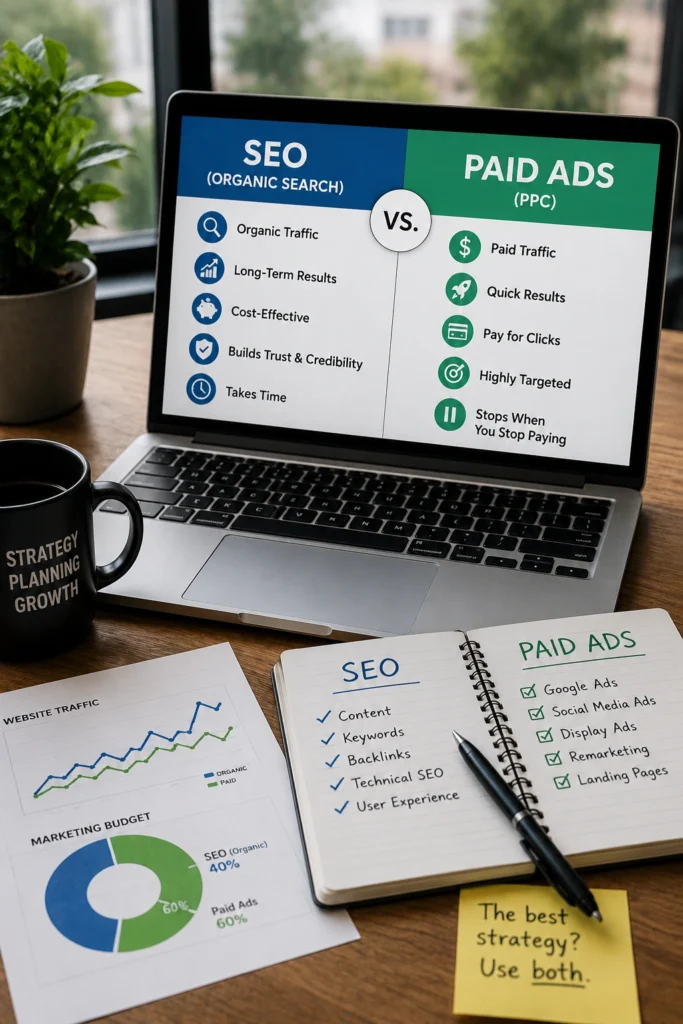
What’s the difference between SEO and paid ads?
SEO builds your visibility in the organic search results, while paid ads buy placement at the top of the page. SEO focuses on earning rankings through helpful content, technical site health, and links, so it compounds over time.
Paid ads, like Google Ads, place you immediately in front of people searching, but you pay for every click. In short, SEO is a long-term asset, and paid ads are instant visibility that stops when you stop paying. Most Las Vegas businesses do best with a smart mix of both.
Why this comparison matters for Las Vegas businesses
Las Vegas has unique demand swings thanks to conventions, tourism, and event seasons. When CES or a big weekend hits near the Las Vegas Convention Center or Allegiant Stadium, search volume spikes and ads can get expensive fast.
Local SEO helps you stay visible year-round in areas like Summerlin, Henderson, and Downtown, while paid ads can capture high-intent visitors during peak periods. Understanding where each channel wins helps you spend wisely and avoid churn.
What problems do owners often run into?
- Spending on ads without strong landing pages, so clicks do not turn into leads
- Waiting on SEO but never publishing consistent, useful content
- Targeting broad keywords like “marketing” instead of buyer-intent phrases like “SEO agency Las Vegas”
- Not tracking calls, forms, or revenue, which makes ROI unclear
- Turning ads off too fast or abandoning SEO too early to see results
• Tip 2: Tune your on-page essentials
Make sure your homepage and top service pages clearly state who you are, what you do, and where you serve. Put your city in title tags and H1s when it fits naturally, keep your name, address, and phone consistent sitewide, and include a click-to-call button. Add a short section near the top that mentions your primary service and Las Vegas, plus nearby areas you serve. Link between related pages so visitors and Google can find your services easily.
• Tip 3: Build reviews the right way
Reviews shape local rankings and conversions. Ask at natural moments, like right after a completed job or a great in-store experience. Share a short review link by text or email, and make it easy with a QR code at checkout. Respond to every review, good or bad, and never offer incentives that violate Google’s policies. A steady stream of authentic feedback is better than a one-time spike.
What problems do Vegas businesses run into?
Many owners in and around The Strip, Downtown, and Spring Valley run into the same issues. Fixing these creates quick wins.
- Incomplete or unverified Google Business Profiles
- Wrong categories or missing services and hours
- Titles and headings without the city or service focus
- Inconsistent name, address, and phone across directories
- Few or old reviews, and no plan to request new ones
• Slow mobile pages that cause visitors to bounce
How often should you update listings and content?
Most local businesses should review key items monthly and refresh content quarterly. A quick monthly sweep of your Google Business Profile, hours, and recent reviews keeps things current. Every quarter, revisit title tags, top pages, and photos, and add one or two new FAQs based on recent customer questions. If you change services, pricing, or coverage areas, update your site and profile the same week.
What’s included in a basic local SEO setup?
Start with the must-haves so your foundation is solid. You can always layer on more later.
- Platforms
- Google Business Profile
- Bing Places and Apple Business Connect
- Website pages
- Homepage that states your service and Las Vegas area
- One page per core service
- A service area or locations page
- Essentials
- Consistent name, address, phone, and hours
- Clear calls to action and click-to-call buttons
- Fast, mobile-friendly pages
What local factors matter in Las Vegas?
Las Vegas search behavior shifts with tourism, events, and seasonality. If you serve neighborhoods like Summerlin, Downtown Las Vegas, and the Arts District, mention them naturally in your content. If you also work in Henderson or North Las Vegas, make that clear so you capture “near me” searches beyond the core city. Referencing familiar touchpoints like the Las Vegas Strip or Allegiant Stadium helps customers understand your service area at a glance.
What benefits can you expect?
Getting the basics right drives consistent, high-intent traffic. You’ll show up more often in the map pack, earn more calls and direction requests, and see better conversion rates from the traffic you already have. Over time, this compounds into stronger brand signals, more reviews, and a steadier flow of leads even during slower seasons.
Mid‑page tip: If you want a quick checkup of your profile and top pages, reach out to Peace I Leave With You Marketing here: Contact or call 702-857-7679. A 15-minute review often uncovers two or three easy fixes.
What are a few extra best practices?
Small habits keep your visibility growing without a big lift.
- Post weekly on your Google Business Profile with photos and a short update
- Add one new customer photo, team photo, or project photo every month
- Use simple, location-aware headings like “Emergency Plumbing in Las Vegas” when relevant
- Track calls, forms, and direction requests so you know what works
- Keep your site fast and mobile-first using PageSpeed Insights.
Frequently Asked Questions
How fast will I see results from these tips?
Many businesses notice more views and calls from Google Business Profile within 2 to 6 weeks, especially after reviews and category fixes. On-page changes can help rankings steadily over 1 to 3 months as Google recrawls your site.
Do I need a blog to rank locally?
Not to get started. A solid Google Business Profile, strong service pages, and consistent reviews can take you far. A blog helps when you answer real customer questions and target long-tail searches, but it’s not step one.
Can I rank locally without a physical storefront?
Yes. Service-area businesses can hide their address and list covered areas in Google Business Profile. Just be sure your website clearly states your service area and contact options.
How many reviews do I need?
Aim for steady, recent reviews rather than a specific total. Ten fresh, detailed reviews can outperform fifty old ones. Ask regularly and respond to each review to build trust.
Conclusion
You don’t need a massive budget to move up locally. Tighten your profile, refine your on-page content, and build reviews with a simple weekly habit.